Curious about the best AI presentation maker? An AI presentation maker is software that uses machine learning to help you get more done — it combines speed, accuracy, and an interface that just works. Hands-on testing shows real-world results vary, so a short free trial is the smartest way to decide. Whether you are a beginner or a pro, the right AI presentation maker slots into your workflow and pays for itself fast. This guide breaks down the top picks, their pros and cons, and who each one is best for.
RFPolicy
The RFPolicy outlines a method for contacting vendors about security vulnerabilities found in their products. It was initially written in 2000 by hacker and security consultant Rain Forest Puppy. It was perhaps the second disclosure policy, following Simple Nomad's. The policy gives the vendor five working days to respond to the reporter of the bug. If the vendor fails to contact the reporter within those five days, the issue is recommended to be disclosed to the general community. The reporter should help the vendor reproduce the bug and work out a fix. The reporter should delay notifying the general community about the bug if the vendor provides feasible reasons for requiring so. If the vendor fails to respond or shuts down communication with the reporter of the problem within five working days, the reporter should disclose the issue to the general community. When issuing an alert or fix, the vendor should give the reporter proper credit for reporting the bug. Context for the history of vulnerability disclosure is available in a history article.
Conference app
A conference app, also known as an event app or meeting app, is a mobile app developed to help attendees and meeting planners manage their conference experience. It typically includes conference proceedings and venue information, allowing users to create personalized schedules and engage with other users. A conference app can be a native app or web-based. In recent years, conference apps have gained in popularity as a sustainable solution for event management by reducing paper produced by printed materials. Advanced features often include real-time notifications for updates or changes, integration with virtual meeting platforms for hybrid or fully online events, and analytics tools for organizers to measure attendance and engagement. Additionally, some apps support sponsorship and exhibitor features, enabling businesses to showcase their products or services directly within the app.
Glossary of robotics
Robotics is the branch of technology that deals with the design, construction, operation, structural disposition, manufacture and application of robots. Robotics is related to the sciences of electronics, engineering, mechanics, and software. The following is a list of common definitions related to the Robotics field. == A == Actuator: a motor that translates control signals into mechanical movement. The control signals are usually electrical but may, more rarely, be pneumatic or hydraulic. The power supply may likewise be any of these. It is common for electrical control to be used to modulate a high-power pneumatic or hydraulic motor. Aerobot: a robot capable of independent flight on other planets. A type of aerial robot. Arduino: The current platform of choice for small-scale robotic experimentation and physical computing. Artificial intelligence: is the intelligence of machines and the branch of computer science that aims to create it. Aura (satellite): a robotic spacecraft launched by NASA in 2004 which collects atmospheric data from Earth. Automaton: an early self-operating robot, performing exactly the same actions, over and over. Autonomous vehicle: a vehicle equipped with an autopilot system, which is capable of driving from one point to another without input from a human operator. == B == Biomimetic: See Bionics. Bionics: also known as biomimetics, biognosis, biomimicry, or bionical creativity engineering is the application of biological methods and systems found in nature to the study and design of engineering systems and modern technology. == C == CAD/CAM (computer-aided design and computer-aided manufacturing): These systems and their data may be integrated into robotic operations. Čapek, Karel: Czech author who coined the term 'robot' in his 1921 play, Rossum's Universal Robots. Chandra X-ray Observatory: a robotic spacecraft launched by NASA in 1999 to collect astronomical data. Cloud robotics: robots empowered with more capacity and intelligence from cloud. Combat, robot: a hobby or sport event where two or more robots fight in an arena to disable each other. This has developed from a hobby in the 1990s to several TV series worldwide. Cruise missile: a robot-controlled guided missile that carries an explosive payload. Cyborg: also known as a cybernetic organism, a being with both biological and artificial (e.g. electronic, mechanical or robotic) parts. == D == Degrees of freedom: the extent to which a robot can move itself; expressed in terms of Cartesian coordinates (x, y, and z) and angular movements (yaw, pitch, and roll). Delta robot: a tripod linkage, used to construct fast-acting manipulators with a wide range of movement. Drive Power: The energy source or sources for the robot actuators. == E == Emergent behaviour, a complicated resultant behaviour that emerges from the repeated operation of simple underlying behaviours. Envelope (Space), Maximum The volume of space encompassing the maximum designed movements of all robot parts including the end-effector, workpiece, and attachments. Explosive ordnance disposal robot A mobile robot designed to assess whether an object contains explosives; some carry detonators that can be deposited at the object and activated after the robot withdraws. == F == FIRST(For Inspiration and Recognition of Science and Technology): an organization founded by inventor Dean Kamen in 1989 in order to develop ways to inspire students in engineering and technology fields. Forward chaining: a process in which events or received data are considered by an entity to intelligently adapt its behavior. == G == Gynoid: A humanoid robot designed to look like a human female. == H == Haptic: tactile feedback technology using the operator's sense of touch. Also sometimes applied to robot manipulators with their own touch sensitivity. Hexapod (platform): A movable platform using six linear actuators. Often used in flight simulators and fairground rides, they also have applications as a robotic manipulator. Hexapod (walker): A six-legged walking robot, using a simple insect-like locomotion. Human–computer interaction. Humanoid: A robotic entity designed to resemble a human being in form, function, or both. Hydraulics: the control of mechanical force and movement, generated by the application of liquid under pressure. cf. pneumatics. == I == Industrial robot: A reprogrammable, multifunctional manipulator designed to move material, parts, tools, or specialized devices through variable programmed motions for the performance of a variety of tasks. Insect robot: A small robot designed to imitate insect behaviors rather than complex human behaviors. == K == Kalman filter: a mathematical technique to estimate the value of a sensor measurement, from a series of intermittent and noisy values. Kinematics: the study of motion, as applied to robots. This includes both the design of linkages to perform motion, their power, control and stability; also their planning, such as choosing a sequence of movements to achieve a broader task. Inverse Kinematics: the process of determining joint angles required for a robot's end-effector to reach a desired position and orientation in space. Used in motion planning to calculate motor commands from target positions. == L == Linear actuator A form of motor that generates a linear movement directly. == M == Manipulator or gripper: A robotic 'hand'. Mobile robot: A self-propelled and self-contained robot that is capable of moving over a mechanically unconstrained course. Muting: The deactivation of a presence-sensing safeguarding device during a portion of the robot cycle. Mecanum wheel: A wheel fitted with angled rollers that enables a robot vehicle to move in multiple directions, including sideways. == O == Ornithopter – An aerial robot or drone that achieves flight through a flapping-wing mechanism rather than rotating blades or fixed wings, often utilized for highly maneuverable flight. == P == Parallel manipulator: an articulated robot or manipulator based on a number of kinematic chains, actuators and joints, in parallel. cf. serial manipulator. Pendant: Any portable control device that permits an operator to control the robot from within the restricted envelope (space) of the robot. Pneumatics: the control of mechanical force and movement, generated by the application of compressed gas. cf. hydraulics. Powered exoskeleton: is a wearable mobile machine that allow for limb movement with increased strength and endurance. Prosthetic robots: programmable manipulators or devices for missing human limbs. == R == Remote manipulator: A manipulator under direct human control, often used for work with hazardous materials. Robonaut: a development project conducted by NASA to create humanoid robots capable of using space tools and working in similar environments to suited astronauts. == S == Sensor fusion:The process of combining data from multiple sensors, such as LiDAR, cameras, global positioning systems (GPS), and inertial measurement units (IMUs), to produce a more accurate and reliable understanding of an environment than using a single sensor alone. It is widely used in robotics and autonomous systems to improve perception, localization, and decision-making. Serial manipulator: an articulated robot or manipulator with a single series kinematic chain of actuators. cf. parallel manipulator. Service robots are machines that extend human capabilities. Servo, a motor that moves to and maintains a set position under command, rather than continuously moving. Servomechanism An automatic device that uses error-sensing negative feedback to correct the performance of a mechanism. Single Point of Control The ability to operate the robot such that initiation or robot motion from one source of control is possible only from that source and cannot be overridden from another source. Slow Speed Control A mode of robot motion control where the velocity of the robot is limited to allow persons sufficient time either to withdraw the hazardous motion or stop the robot. Snake robot A robot component resembling a tentacle or elephant's trunk, where many small actuators are used to allow continuous curved motion of a robot component, with many degrees of freedom. This is usually applied to snake-arm robots, which use this as a flexible manipulator. A rarer application is the snakebot, where the entire robot is mobile and snake-like, so as to gain access through narrow spaces. Stepper motor Stewart platform A movable platform using six linear actuators, hence also known as a Hexapod. Subsumption architecture A robot architecture that uses a modular, bottom-up design beginning with the least complex behavioral tasks. Surgical robot, a remote manipulator used for keyhole surgery Swarm robotics involve large numbers of mostly simple physical robots. Their actions may seek to incorporate emergent behavior observed in social insects (swarm intelligence). Synchro == T == Teach Mode: The control state that al
Educational robotics
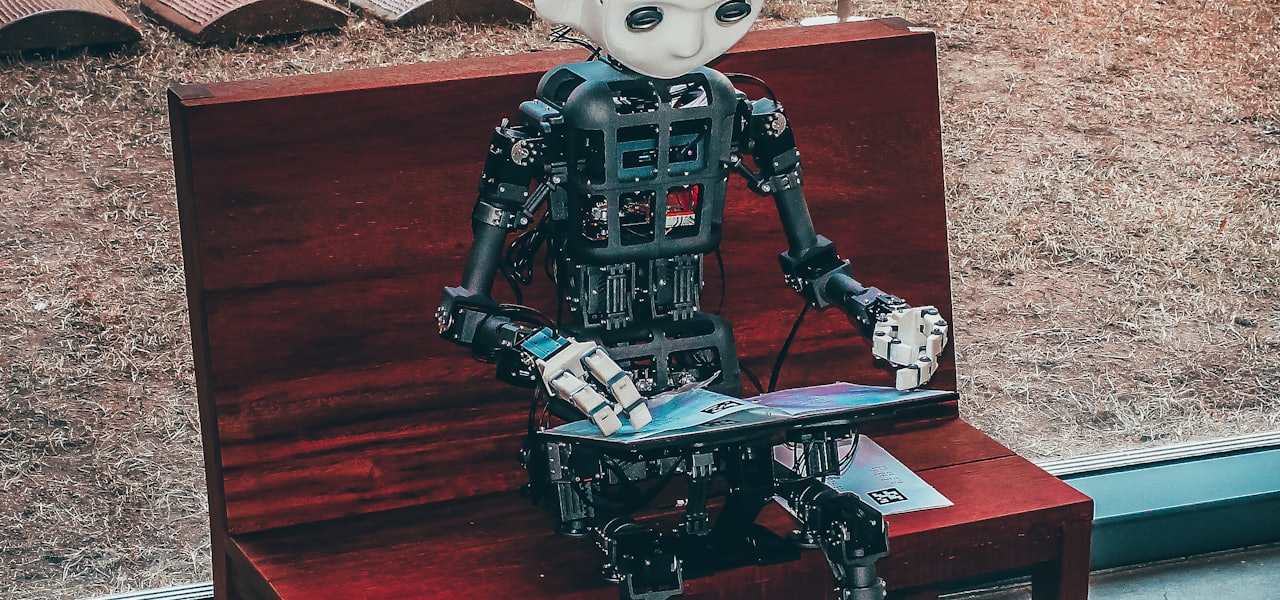
Educational robotics teaches the design, analysis, application and operation of robots. Robots include articulated robots, mobile robots or autonomous vehicles. Educational robotics can be taught from elementary school to graduate programs. Robotics may also be used to motivate and facilitate the instruction other, often foundational, topics such as computer programming, artificial intelligence or engineering design. == Education and training == Robotics engineers design robots, maintain them, develop new applications for them, and conduct research to expand the potential of robotics. Robots have become a popular educational tool in some middle and high schools, as well as in numerous youth summer camps, raising interest in programming, artificial intelligence and robotics among students. First-year computer science courses at several universities now include programming of a robot in addition to traditional software engineering-based coursework. == Category of Educational robotics == The categories of educational robots seen as having more than one category. It can be alienated into different categories based on their physical design and coding method. Generally they are categorised as arm robots, wheeled mobile robots and humanoid robots. Tangibly, coded robots uses a physical means of coding instead of the screens coding. === Initiatives in schools === Leachim, was a robot teacher programmed with the class curricular, as well as certain biographical information on the 40 students whom it was programmed to teach. Leachim could synthesize human speech using Diphone synthesis. It was invented by Michael J. Freeman in 1974 and was tested in a fourth grade classroom in the Bronx, New York. === Post-secondary degree programs === From approximately 1960 through 2005, robotics education at post-secondary institutions took place through elective courses, thesis experiences and design projects offered as part of degree programs in traditional academic disciplines, such as mechanical engineering, electrical engineering, industrial engineering or computer science. Since 2005, more universities have begun granting degrees in robotics as a discipline in its own right, often under the name "Robotic Engineering". Based on a 2015 web-based survey of robotics educators, the degree programs and their estimates annual graduates are listed alphabetically below. Note that only official degree programs where the word "robotics" appears on the transcript or diploma are listed here; whereas degree programs in traditional disciplines with course concentrations or thesis topics related to robotics are deliberately omitted. === Certification === The Robotics Certification Standards Alliance (RCSA) is an international robotics certification authority that confers various industry- and educational-related robotics certifications. === Summer robotics camp === Several summer camp programs include robotics as part of their core curriculum. In addition, youth summer robotics programs are frequently offered by celebrated museums such as the American Museum of Natural History and The Tech Museum of Innovation in Silicon Valley, CA, just to name a few. There are of benefits that come from attending robotics camps. It teaches students how to use teamwork, resilience and motivation, and decision-making. Students learn teamwork because most camps involve exciting activities requiring teamwork. Resilience and motivation is expected because by completing the challenging programs, students feel talented and accomplished after they complete the program. Also students are given unique situations making them make decisions to further their situation. === Educational robotics in special education === Educational robotics can be a useful tool in early and special education. According to a journal on new perspectives in science education, educational robotics can help to develop abilities that promote autonomy and assist their integration into society. Social and personal skills can also be developed through educational robotics. Using Lego Mindstorms NXT, schoolteachers were able to work with middle school aged children in order to develop programs and improve the children's social and personal skills. Additionally, problem solving skills and creativity were utilized through the creation of artwork and scenery to house the robots. Other studies show the benefits of educational robotics in special education as promoting superior cognitive functions, including executive functions. This can lead to an increased ability in "problem solving, reasoning and planning in typically developing preschool children." Through eight weeks of weekly forty-five-minute group sessions using the Bee-Bot, an increase in interest, attention, and interaction between both peers and adults was found in the school and preschool-aged children with Down Syndrome. This study suggests that educational robotics in the classroom can also lead to an improvement in visuo-spatial memory and mental planning. Furthermore, executive functions seemed to be possible in one child during this study.
Vulnerability Discovery Model
A Vulnerability Discovery Model (VDM) uses discovery event data with software reliability models for predicting the same. A thorough presentation of VDM techniques is available in. Numerous model implementations are available in the MCMCBayes open source repository. Several VDM examples include: Alhazmi-Malaiya: Time based model (Alhazmi-Malaiya Logistic (AML) model) Alhazmi-Malaiya: Effort based model Rescorla: Quadratic Model and Exponential Model Anderson: Thermodynamic Model Kim: Weibull Model Linear Model Hump-Shaped Model Independent and Dependent Model Vulnerability Discovery Modeling using Bayesian model averaging Multivariate Vulnerability Discovery Models
Straight-Through Quality
Straight-Through Quality (STQ) are approaches and outputs of test automation that have quality and deliver business benefit. STQ takes its name from the business concept of straight-through processing (STP). Also acting as a tool and enabler for STP. Traditional techniques for testing and delivery have often required a great deal of manual support and intervention. These approaches are subject to human error, cost of delay and lack of reuse. These also have the negative side-effect of being unable to deliver 'fail-fast' approaches, which have proven popular with Agile practitioners. Previous traditional approaches have been typically expensive where whole silo'ed departments are created within commercial companies to deliver Quality and Deployment alone. Thus STQ as an approach hopes to resolve this problem. == Examples == Tangible examples of STQ approaches in the software industry are present and often known as continuous integration (CI) and continuous delivery (CD). These combined can ensure that software delivery is integrated, automatically tested and ready for automatic delivery at any time. Together CI/CD can enable STQ which can be used as Business output terminology for business users who do not understand the technical complexities of CI/CD.